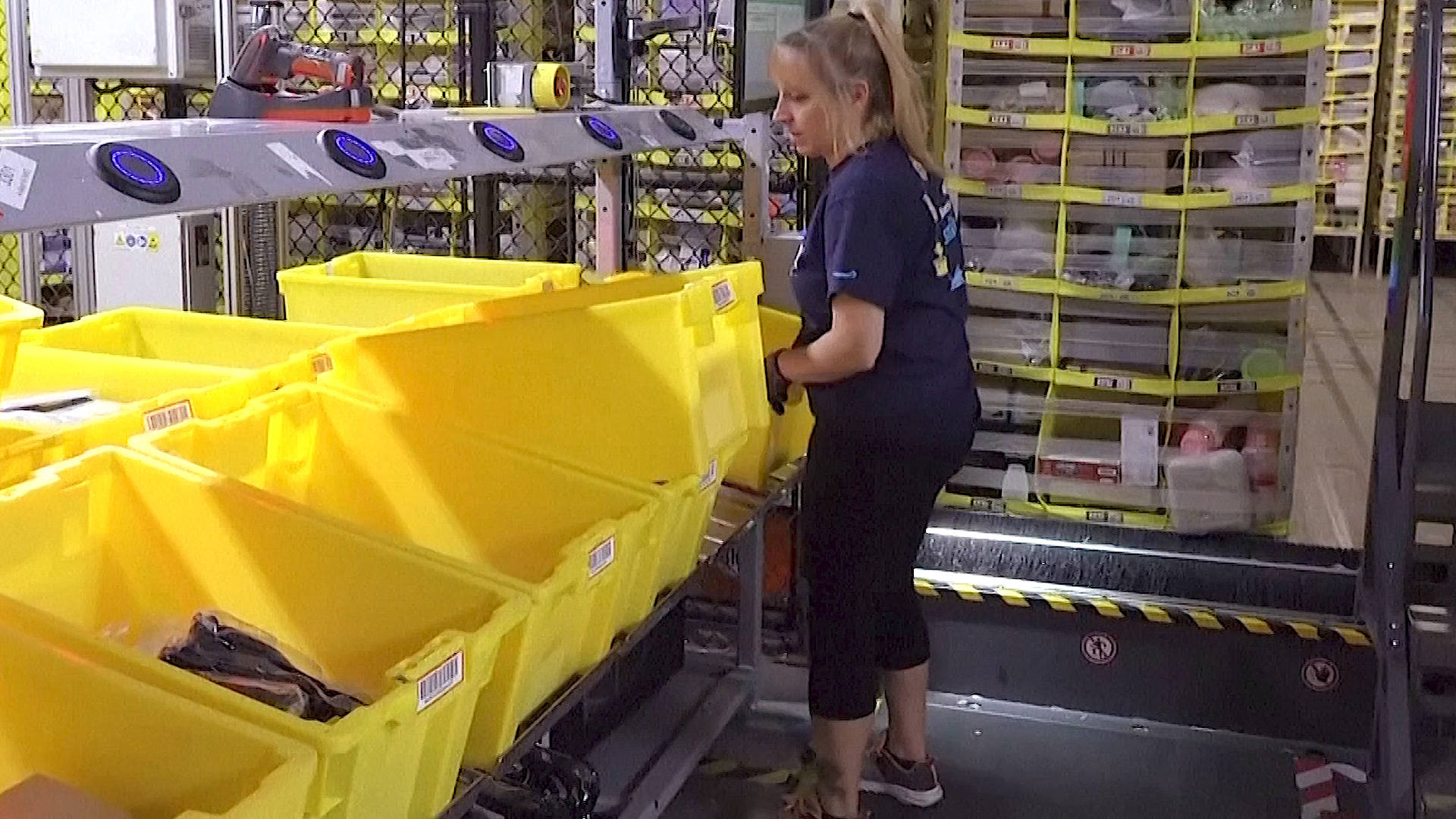
Andersson, a member of The Left from Finland, said Amazon representatives told the delegation that the company monitors workflows rather than individual workers. But performance targets are set through that monitoring, she said, and are relative: 10% of workers will always be placed in the lowest-performing group. As workers speed up, targets rise, she added.
At more automated German warehouses, workers reported walking less but doing more monotonous tasks at a faster pace. Some also raised concerns about pressure and intimidation aimed at employees who sought to unionize. Andersson said the company had refused to engage in collective bargaining and that such tactics have no place in Europe. Amazon said employees are free to join a union, and that it works with elected works councils in Germany and other employee representative bodies across the EU.
The EU already has the AI Act, the General Data Protection Regulation and the Platform Work Directive. Andersson said legislation should consolidate protections for workers and technology use, pointing to a recent independent assessment that found gaps among the laws. Amazon warehouse work is not covered by the Platform Work Directive, although the measure includes provisions on algorithmic management and workers’ access to information about data use. The directive’s national implementation deadline is 2 December 2026; Slovakia and Italy are the only countries to have finalized legislation so far.
Andersson expects the Commission’s proposed Quality Jobs Act to include a chapter on AI and algorithmic management. She also called for a common EU approach, rather than different rules across member states. For automated employment decisions, she said, a person should take responsibility for consequential actions such as dismissals. She cited a Finnish case in which labor courts ruled illegal the termination of ten social security agency workers for not clicking frequently enough in a remote-work system.
Amazon disputed the representativeness and independent verification of a 2023 survey in which 57% of workers surveyed said monitoring had harmed their mental health; 51% reported a negative effect on physical health. The company said it had invested more than $2.5 billion in safety since 2019 and that its Global Recordable Incident Rate had improved 43% over six years. It also said more than 200,000 employees used its Dragonfly safety feedback tool in 2025. The Parliament revoked Amazon representatives’ access badges in 2024 after disagreements over hearings and warehouse visits; the company said it was pleased to host the committee delegation in Germany and Poland.
Comments (0)
No comments yet. Be the first!