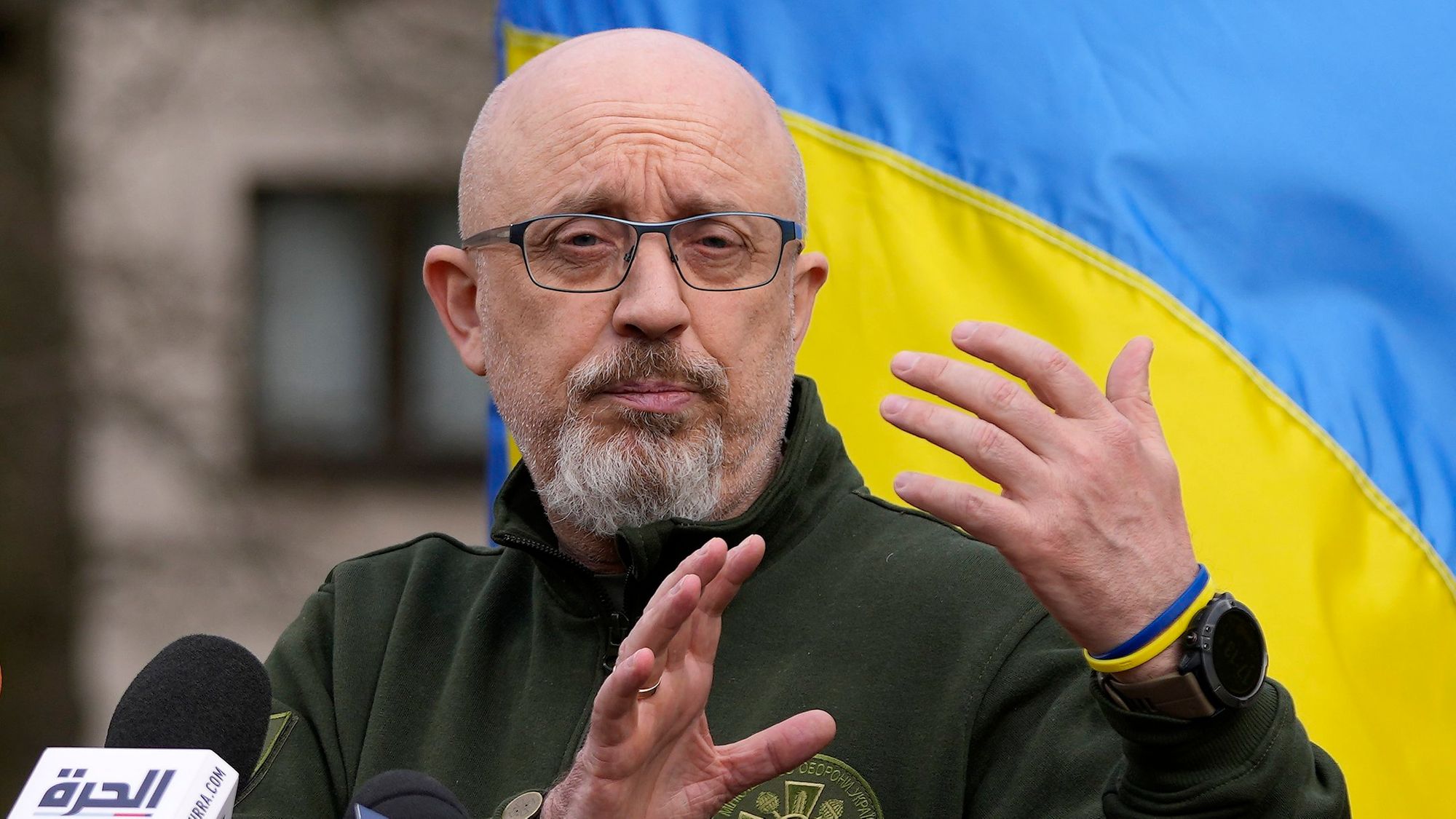
Reznikov said the alliance would draw on Ukraine’s experience of war and include Lithuania, Latvia and Estonia, alongside the Scandinavian countries and Poland. He expects Turkey to join and said Romania and Bulgaria would consider taking part. He offered no timetable for its formation.
The former minister also described his approach to persuading Western governments to supply weapons. Germany initially resisted providing Leopard tanks, he said, citing the historical sensitivity of German tanks being used against Russia. Reznikov said he proposed training Ukrainian crews in Germany, then sought Abrams tanks from the United States, Challengers from Britain and tanks from France to demonstrate that other countries were willing to help.
He recalled working with Polish defence minister Mariusz Błaszczak to press for permission to transfer Polish Leopards. At a meeting at Ramstein, Reznikov said, Germany agreed to provide training for Ukrainian crews on Western tanks. Germany later agreed to supply Leopard tanks, he said.
On diplomacy with Moscow, Reznikov said Russian delegates treated the Ukrainian team with professional courtesy during talks in Belarus in February 2022, four days after Russia’s full-scale invasion, and in later rounds in Belarus and Istanbul. He said the atrocities he saw in Bucha, Irpin and Hostomel after Russian forces withdrew changed Ukraine’s view of negotiations—not pressure from then-British prime minister Boris Johnson.
Reznikov said Europe should have a place at any peace talks because its security interests are at stake. He also argued that negotiators must set aside personal emotions, while warning that any agreement could rely on “constructive ambiguity,” allowing each side to present its interpretation to its own public.
Comments (0)
No comments yet. Be the first!